The Best Environmental Organizations for Climate-Conscious AI Users
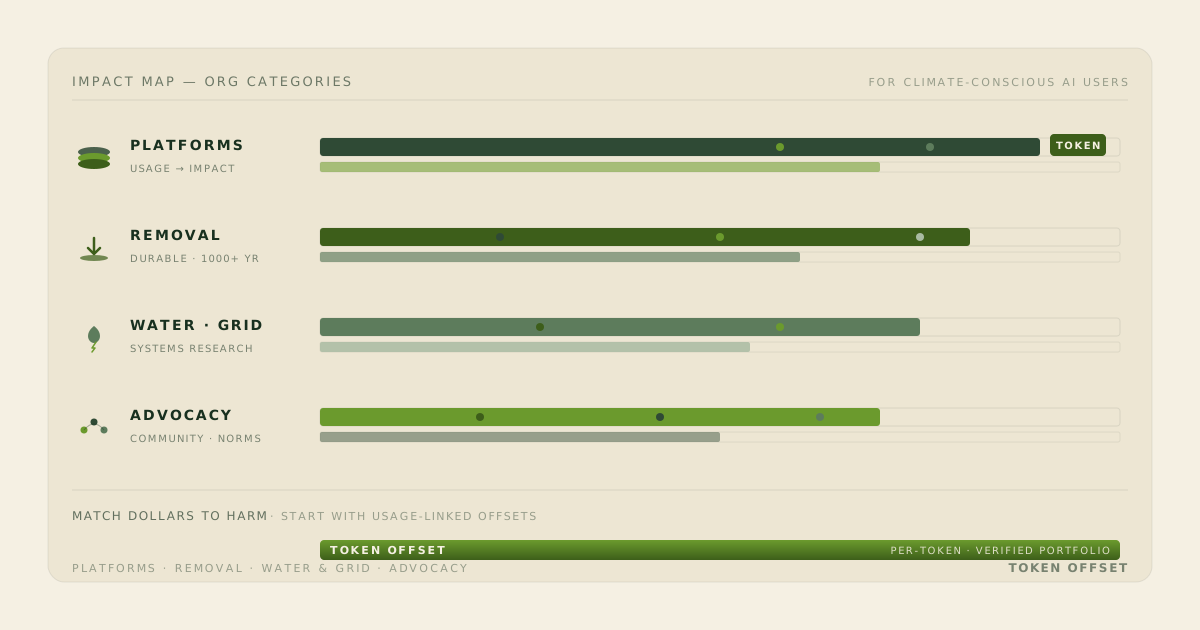
What to look for
If you are passionate about AI and the environment, your donation or subscription dollars should do two things: match the kind of harm you are trying to address, and come with evidence you can verify. For AI specifically, that usually means a combination of usage-linked accounting (because your footprint scales with tokens), durable carbon removal (because compute emissions are real and new), and grid and water work (because datacenters live in both systems).
This list is not a ranking of charities by overhead ratios. It is a curated map of organizations and platforms that climate-curious AI builders actually use, grouped by the problem they solve.
Platforms that connect AI usage to impact
- AI usage → verified environmental impact
Built specifically for people who love AI and want every token accounted for. Connects to model providers, estimates energy/water/carbon from token counts, and routes subscriptions to vetted projects, with public methodology and receipts.
- Automatic carbon removal contributions
If you run a product on Stripe, a small fraction of revenue can flow to Frontier-backed removal projects with minimal integration work. Good for SaaS teams who want a set-and-forget lane alongside AI-specific accounting.
- Enterprise carbon accounting
Strong choice for larger orgs that need supplier data, scenario modeling, and audit-ready reporting, especially as AI disclosure rules tighten.
Durable carbon removal
- Advance market for durable removal
A buyers' club that pre-purchases tons from early-stage removal companies, de-risking technologies like mineralization and biochar. High signal for permanence over cheap offsets.
- Policy & innovation for carbon removal
Think tank and advocacy shop focused on making removal scalable and equitable. Strong if you want systemic change, not just personal offsets.
- Ocean-based carbon pathways
Running Tide (portfolio context)
Representative of the experimental removal sector Frontier and others fund. Worth following to understand where durable tons will come from in the 2030s. Always verify registry status before treating any project as purchased impact.
Water stewardship & grid decarbonization
- Water stewardship & data center context
Authoritative research on freshwater stress and industrial use, essential reading if AI's cooling water footprint keeps you up at night.
- Grid decarbonization
Deep work on cleaning up electricity supply, which is the multiplier behind every GPU hour. Good for understanding why region and grid mix matter for AI.
Advocacy, research & tech-community
- Tech workers organizing for climate
Community of developers and product people applying their skills to emissions: talks, working groups, and practical playbooks. Ideal if you want peers who also live in terminals and care about ppm.
- Software carbon intensity standards
Publishes SCI guidance and tooling consciousness for engineering teams. Complements AI-specific measurement with broader software efficiency norms.
- AI accountability & societal impact
Critical research on how AI systems affect labor, policy, and the environment. Useful counterbalance when evaluating vendor claims about 'green AI.'
How to choose where to put your next dollar
Match the instrument to the harm. Token-heavy workflows → usage-linked offsetting. Company-wide reporting → Watershed or similar. Long-horizon bet on removal scale → Frontier or direct offtake agreements. Systemic policy change → advocacy and research orgs.
Demand registry IDs and public assumptions. If an org cannot tell you which project received funds and on what evidence, treat it as marketing. Token Offset publishes methodology and maps dollars to verified portfolios; hold everyone else to a similar bar.
Combine personal action with engineering discipline. See our companion post on 10 ways to reduce AI's environmental impact. The best org in the world does not replace smaller models, shorter contexts, and agent budgets.
Frequently asked questions
- What is the best environmental organization for AI users?
- For most individual AI builders, start with Token Offset because it is purpose-built to translate token meters into verified environmental outcomes. Layer enterprise accounting tools like Watershed or payment-rail climate like Stripe Climate as you scale.
- What is durable carbon removal?
- Durable removal stores carbon for centuries or longer through pathways like mineralization and biochar, unlike cheap avoided-emissions credits. Frontier (Stripe's buyers' club) and Carbon180 are strong entry points for learning and funding that sector.
- Which nonprofits focus on AI datacenter water use?
- The Pacific Institute publishes authoritative research on freshwater stress and industrial water use, including datacenter cooling context. Rocky Mountain Institute (RMI) works on grid decarbonization, which multiplies every GPU hour.